
You know your dog needs more exercise. You also know that by the time you get home, cook dinner, and deal with everything else, a 45-minute structured walk isn't happening. Being busy doesn't make you a bad dog parent. There's a difference. We hear this from families across Sydney (Inner West professionals, Bayside parents, Eastern Suburbs shift workers) and the answer is almost never "just try harder."
What actually works when time is tight.
When you don't have time for a proper walk
The honest answer? Some days you won't. And that's okay, as long as those days aren't every day. Here's how to cover the gap:
Hire a trainer-led walker, not just a dog walker.
There's a big difference. A good walking service should be working on recall, loose-lead skills, and mental enrichment, not just running your dog ragged around the block. That's what our Canine Adventures do: your dog gets physical exercise, scent work, and decompression in natural environments, all led by a certified trainer.
Use food puzzles instead of a bowl.
Ditch the food bowl entirely on busy days. Scatter feeding, Kongs, Lickimats, and Toppl toys turn mealtime into mental exercise. It won't replace a walk, but it takes the edge off, and a mentally tired dog is a calmer dog.
Play games inside.
Hide-and-seek with treats around the house, a simple "find it" game, or even a makeshift obstacle course with cushions and chairs. Five minutes of nose work can tire your dog out more than you'd think.
When you're not home
A bored dog left alone is a dog who finds their own entertainment, and you probably won't like what they choose. Try these:
Puzzle toys with food.
Fill them before you leave. Frozen Kongs are great because they last longer and give your dog something to work on during that first hour when they're most likely to get restless.
A treat-dispensing camera.
Lets you check in and drop a treat remotely. It's not a substitute for actual enrichment, but it can break up a long stretch alone.
Canine Adventures or a trusted sitter.
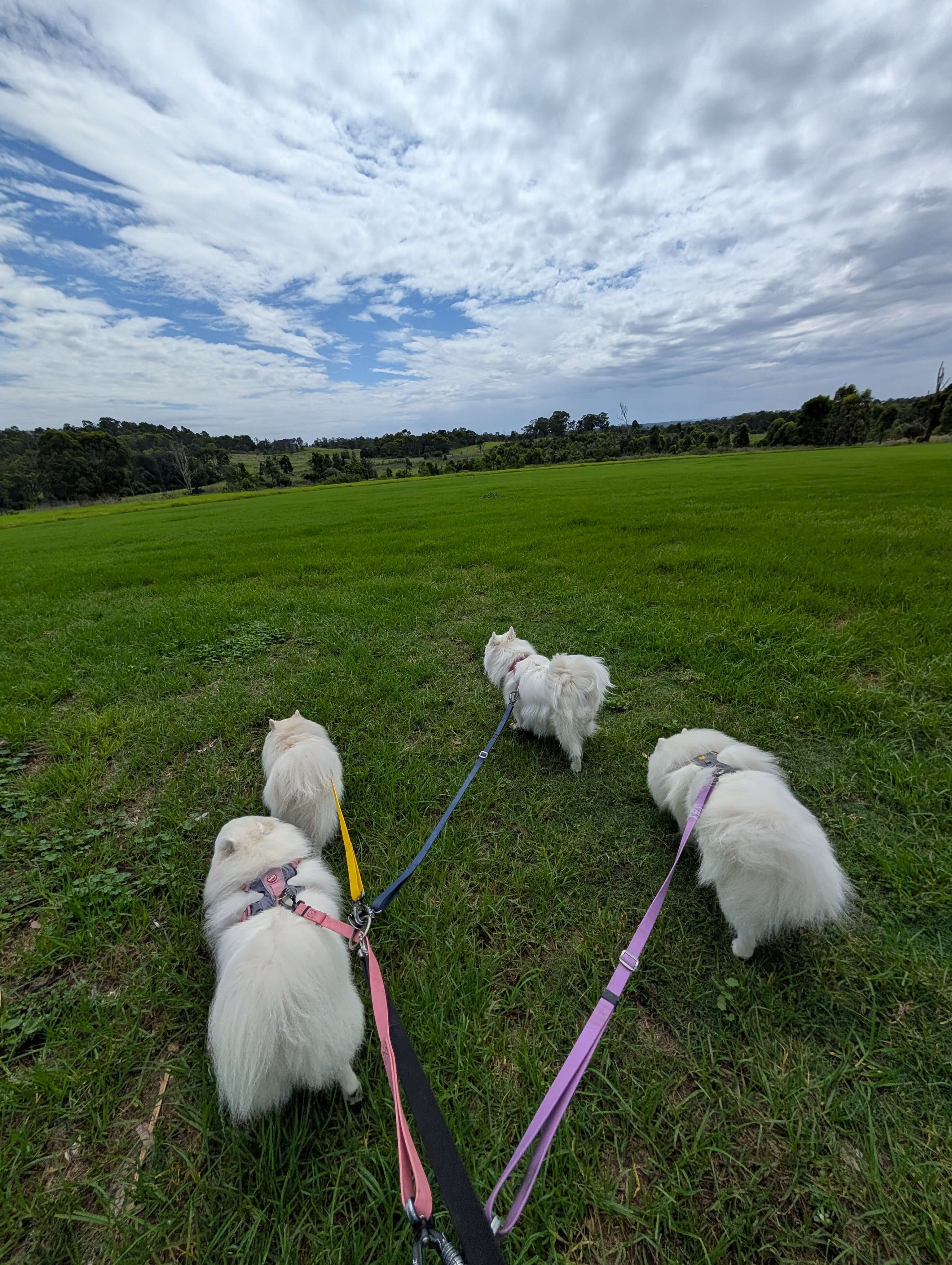
If your schedule means your dog is home alone most of the day, a weekly adventure (four hours of hiking, swimming, and exploring) can be the thing that makes the rest of the week manageable. For younger dogs, older dogs, or breeds that can't handle long outings, a good sitter who'll give them some gentle exercise and company is worth every dollar.
When your dog pulls on walks
This is probably the most common thing we hear. And it makes sense: if every walk is a battle, you stop wanting to go. Here's how to change it:
Teach loose-lead walking using games.
Not just "heel" on repeat. Actual concept training through games where your dog learns that staying close to you is more rewarding than forging ahead. This is something we cover in both our private programs and group classes, and it's one of the fastest wins most families see.
Consider a front-clip harness.
It gives you more control without causing discomfort. A head halter can also work well for dogs who just want to forge ahead on every walk, but if your dog is reactive (lunging at dogs or people), a halter isn't always the right fit. The sudden redirection can make things worse for an already stressed dog. Talk to a trainer before using one for reactivity.
Add mental challenges to walks.
Ask for a sit before crossing the road. Do a quick recall game in a quiet section of the park. Practice "leave it" past a tempting smell. Walks that engage your dog's brain reduce pulling because they're actually paying attention to you, not just powering forward on autopilot.
Miyuki's story
Vid is a doctor with kids and a husband, the kind of schedule where something always gives. When Miyuki was a puppy, Vid worked with us through Dog Training to get the foundations right. But keeping up with Miyuki's exercise and enrichment needs solo wasn't sustainable long-term.
We built a structured combination: Walk & Trains twice a week to keep building real-world skills, plus a weekly adventure session for social confidence and decompression. When Miyuki graduated from that phase, she moved onto Canine Adventures, and over eighteen months later, she's still coming every week. Her weekly adventure day is the highlight of her routine, and it means Vid doesn't have to choose between being a good dog owner and keeping the rest of her life running.
Does your dog need a walk every single day?
Most dogs do, yes. But "a walk" doesn't always mean the same thing. A 20-minute sniffy walk where your dog gets to choose the route and explore at their own pace can be more valuable than a 45-minute march along the footpath. It depends on your dog's breed, age, and energy level. Some dogs need two solid outings a day. Others do well with one walk plus some food puzzles at home.
If you're not sure what your dog actually needs, that's a conversation we're happy to have. Book a free 15-minute discovery call and we'll help you figure it out.