
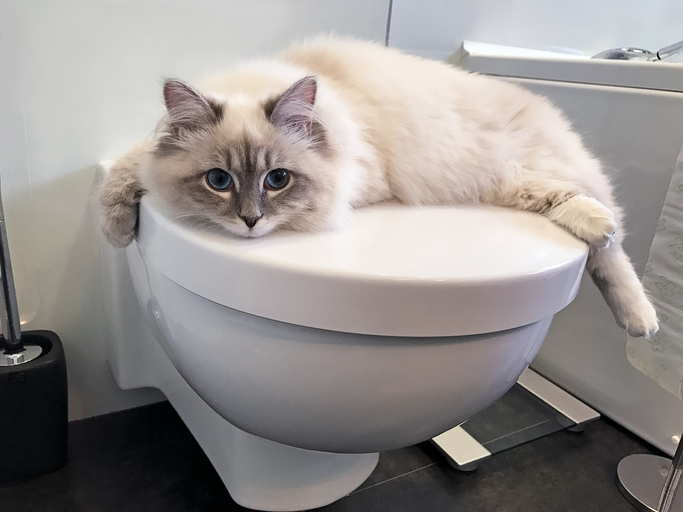
Your cat has decided the litter tray is optional. Maybe they're using the bath mat, the laundry pile, or a corner of the spare room. Maybe it's happening daily. Maybe it's unpredictable. Either way, you're cleaning up places you shouldn't have to clean, and you want it to stop.
Good news: this is fixable. In most cases, it's one of the easier cat behaviour problems we see across Sydney, and it's usually more straightforward to solve than you'd think once you understand what's driving it.
Why it's happening
There are four common reasons a cat stops using their tray, and they all come back to either a preference or an aversion: to a surface or a location.
Surface preference
Your cat prefers the texture of your bath mat, towel, or carpet over the litter you're using.
Location preference
Your cat has found a spot they feel safer in: quieter, more private, or further from other pets.
Surface aversion
The litter type is uncomfortable underfoot. Crystal litter and some pellets are common culprits.
Location aversion
The tray is in a high-traffic area, near loud appliances, or being guarded by another cat.
Each of these has a specific fix. The trick is figuring out which one applies to your cat. (Credit to Dr Karen Overall's diagnostic categories for this framework, it's the clearest way to think about it.)
Start with the vet
Before you change anything at home, get your cat checked. Urinary tract infections, kidney issues, hypothyroidism, and other medical conditions can all cause changes in toileting behaviour. A vet can rule these out and save you weeks of troubleshooting the wrong problem.
While you wait for results, there are practical things you can start on straight away.
Five things to change now
Get the right tray.
Most commercially available litter trays are designed to appeal to the person buying them, not the cat using them. They're too small, often covered, and sometimes "self-cleaning", which in practice means soiled litter gets buried under a layer of fresh litter where your cat can still smell it perfectly well.
Your cat needs a tray big enough to stretch out in, with low sides or an open top so they don't feel trapped. Covered trays with one exit trigger a cat's instinct to avoid enclosed spaces where they can't escape from a threat. It doesn't matter that there's no actual threat in your living room. Their brain doesn't know that.
Clean the trays every day.
Cats aren't dogs. They won't tolerate a dirty toilet and they shouldn't have to. If the tray isn't clean, many cats will simply find somewhere else to go, and you can't blame them.
Scoop daily at minimum. Keep a roll of dog poo bags and a scoop next to each tray so it takes thirty seconds, not a whole production. The easier you make it for yourself, the more likely it actually gets done.
Have enough trays, and put them in different rooms.
The formula is simple: number of cats plus one equals number of trays. One cat needs two trays. Two cats need three. And so on.
The part people miss: those trays need to be in separate locations, not lined up side by side. In a multi-cat household, one cat can guard a tray area and block another cat's access entirely. If all three trays are in the laundry, you effectively have one toilet, and a territorial cat standing at the door.
Location matters more than you'd think.
Keep trays in quiet, low-traffic spots, away from food and water. You wouldn't want to eat dinner next to the bathroom, and neither does your cat. Avoid placing trays in busy hallways, near the washing machine, or anywhere with sudden noise or movement.
Test their litter preference.
If your cat is avoiding the tray but toileting happily on soft surfaces (bath mats, towels, laundry), it's probably a substrate preference. They don't like the feel of the litter you're using.
Line up a few trays with different litter types and see which one they use first. Clumping clay tends to work well for most cats. It's soft, sandy, and easy to clean. Recycled paper pellets are another option. I'd generally steer clear of crystal litter. If you've ever stepped on one of those crystals barefoot, you'll understand why your cat might not want to stand on them either.
And one thing that makes a bigger difference than people expect: fill the trays properly. Don't skim the bottom with a thin layer. Cats like to dig. A generous amount of litter in each tray can be the difference between a cat who uses it happily and one who goes elsewhere.
A story from a consult
I visited a client whose cat had never once used the tray. When I got there, the tray had barely a scattering of litter across the bottom. I filled it up properly, a good deep layer. The cat heard the sound of litter being poured, came running in from the garden, and used the tray immediately.
Sometimes the fix really is that simple.
If none of this works
If you've made all five changes and the problem persists, it's likely not a toileting issue at all. It's a stress issue. Anxiety, inter-cat tension, environmental changes, or underlying medical conditions can all manifest as inappropriate toileting. This is especially common in multi-cat households and apartment living, something we see a lot of in Sydney's Inner West and Eastern Suburbs.
At that point, it's worth speaking to your vet or a veterinary behaviourist about whether medication or a more structured behaviour plan might help. And if you'd like help working through the problem from the behaviour side, that's exactly what our cat behaviour consultations cover. We look at the full picture, not just the litter tray.