

Let's get you back to enjoying your dog
Stop dreading the lead and the front door, and feel like you and your dog are on the same team again.


Your dog knows 'sit' in the kitchen. But then...
On lead, at the front door, or when the neighbour's cat streaks across the yard, it all falls apart.
That's not a training failure. It means the training isn't finished yet, and it's one of the most common things we see.
It's like taking the training wheels off before you've learnt to balance. Suddenly you're balancing, steering and pedalling all at once, and under pressure it falls to pieces.
Puppy preschool and group classes are a great start. The next step is helping your dog use those skills in everyday life, without you having to ask every time.
Sounds
Familiar?
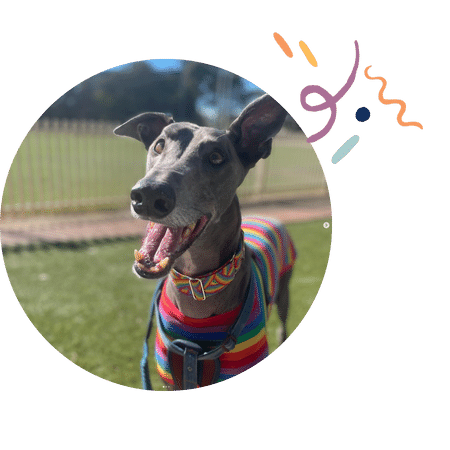
Brad no longer jumps up on people and says hi with his best manners
Our greyhound Brad wasn't always on his best behavior when meeting new people. He's a big boy (36kgs), so jumping up on people to say hello and give them a kiss wasn't ideal (even if he was just being friendly). With Marianne's help, Brad no longer jumps up on people and says hi with his best manners! We continue to seek Mariannes advice and recommend her to anyone who loves their dog and needs a bit of help!
Tom & Brad
Knowing the word 'sit' and choosing to sit to greet someone are actually different skills.
Often, we're asking for more than our dogs have learnt how to do. They've practised a skill in one situation, so we assume they'll be able to use it somewhere much harder. But knowing how to sit in the kitchen doesn't mean they're ready to sit while your friends arrive and everyone's excited.
That takes practice, again and again, with distractions your dog is ready to handle. It also means setting things up so your dog has a chance to get it right, and making sure their daily needs are met so they're in a better position to learn. We need to build those foundations before asking for behaviour they're not ready to give.
We help you get from constantly nagging to watching your dog make good choices for themselves. We build a plan around your dog, your routine and the situations you need help with, bringing together three things: Management, Enrichment and Training.

The three pillars of every plan

Management
We help you set up your environment so your dog can't keep practising the behaviour you're trying to change. Think of it as putting the fence at the top of the hill instead of calling the ambulance at the bottom.

Enrichment
Not just a walk to the park, enrichment is meeting your dog's needs daily. We work out which needs are going unmet and build realistic solutions into your existing routine.

Training
Building useful skills your dog actually needs for your lifestyle. Loose-lead walking, recall that works outside the backyard, settling when guests arrive, impulse control at the front door.
How it works
Get clear on what your dog needs
Start with your assessment. We look at what's happening with your dog, what you've tried and what you'd like to change, and together we agree what to focus on first.
Know what to do at home
Within one business day you get a written plan setting out your priorities and what to work on first. From then you have a month of support by email or text: send us videos of your training, ask questions, and we'll adjust your plan as your dog progresses. We reply the same business day.
Help those skills hold up in everyday life
After your assessment, we'll tell you whether more sessions would help and what they'd involve. Ask us anything before you decide. Booking an assessment doesn't sign you up to a program.
Feel confident carrying on
The aim is for your dog to use their skills with less prompting from you, and for you to know how to help when things get difficult. You'll learn to recognise when your dog is ready for more of a challenge and when to make things easier, so you can keep building on what you've learnt together.
We'll give you the timing and cost of any further sessions after your assessment, so there's nothing to choose before we meet you.
Get the help you need




"This has been the best thing we have done for our girl Nala!"
"Great tips for us to understand and use, very accommodating, approachable and reliable. We had seen an improvement in a week with our puppy which just increased with every session. Don't hesitate, just book — highly recommend!"
Christina & Nala
Private Dog Training isn't the right fit if...
Your dog is reactive on lead
If walks involve barking, lunging or growling, tell us what's happening. You can read how we work with reactive dogs, but there's no separate program to choose before your assessment.
See Reactive Dog TrainingThere's a bite history
If your dog has bitten or snapped at a person or another dog, tell us before you book an in-person appointment. We need to hear what happened first, so we can tell you whether an assessment or a referral is the right next step.
Want to chat? Book a callYou need trainer-led sessions without attending
If you need trainer-led practice between your own sessions with your dog, we can tell you after your assessment whether Walk & Train would suit.
See Walk & TrainNot sure where you sit?
Take the quizWhat it costs
Start with your assessment
Enjoy evenings where your dog settles beside you, and walks where nobody gets dragged down the street. It starts with your assessment, where we work out why the jumping, pulling or chewing is happening and you leave with steps you can start that day.
Step 01
Your two-hour assessment
We look at what's driving the behaviour, what you've already tried and what you'd like everyday life with your dog to look like.
- In your home
- from $395
- At our venue
- $450
- Online
- $295
Our venue is at 4 Australia Street, Camperdown, on Saturdays. Venue hire is included.
Step 02
Your plan and a month of support
Your written plan arrives within one business day. For the next month, send us questions or videos by email or text and we'll reply the same business day.
- With every assessment
- Included
Step 03
Follow-ups when you need them
So the new habits hold up in everyday life, not just when you're practising. Booked one at a time, and each one adds another month of support.
- In your home
- $220 to $275
- At our venue
- $220
- Online
- $165
Your postcode sets the home price.

Just what your dog needs
Some dogs need one follow-up, some need a handful. We'll tell you what we'd suggest at the end of your assessment, and you decide from there.
Or book or .
Want to chat first? Book a callAfterpay, Zip and PayPal Pay in 4 available.
Questions people actually ask
- Yes. Book the assessment on its own. Once we've met you and your dog, we'll recommend what further help could be useful. Any follow-up sessions are a separate decision.
- No. If you're ready, book your assessment directly. If you'd like to ask us a few questions first, you can book a call.
- We look at what happens in your dog's day, what you've already tried and what you'd like your dog to do instead. Together, we agree practical priorities, and we flag any health or safety concerns. Your written plan follows within one business day, with a month of support by email or text from the day it arrives.
- Home visits depend on your postcode. Online and Camperdown are available where they suit your dog. Camperdown assessments run on Saturdays from 12 pm to 5 pm. The booking calendar shows what's actually free.
- We'll recommend that after your assessment, based on your dog's needs, your priorities and how much practice your household can fit in. You don't choose a program beforehand. We can't promise an outcome or a set finish date.
- Tell us before you book an in-person appointment. We need to hear what's happened, then we'll tell you whether an assessment, your vet or another practitioner is the right next step.
Real dogs, real problems, real progress
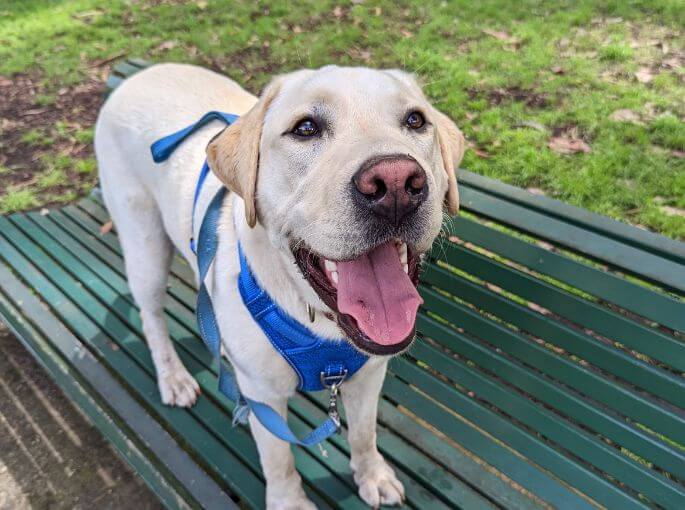
Ellen's 40kg Lab was eating everything off the street, pulling her down the footpath, and getting harder to control by the week. Her elderly mother and kids couldn't walk him safely. Here's what changed.
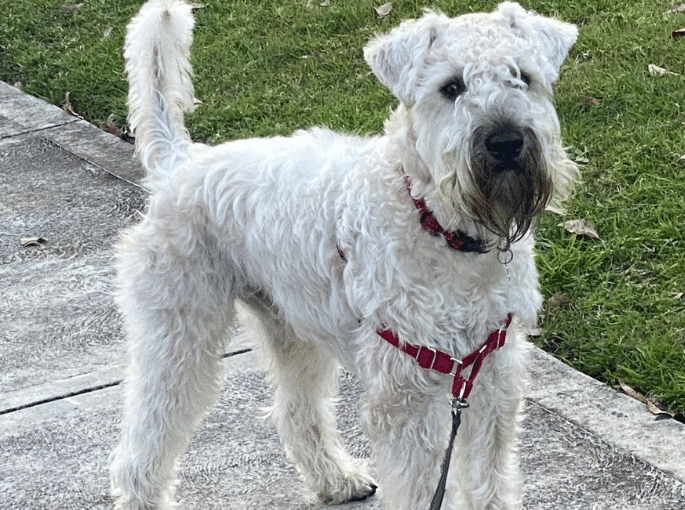
Merlin was pulling on walks, jumping on everyone, and ignoring recall. Jenny didn't know how to channel his intelligence. Then she saw a Pet Professor trainer in action at the park.
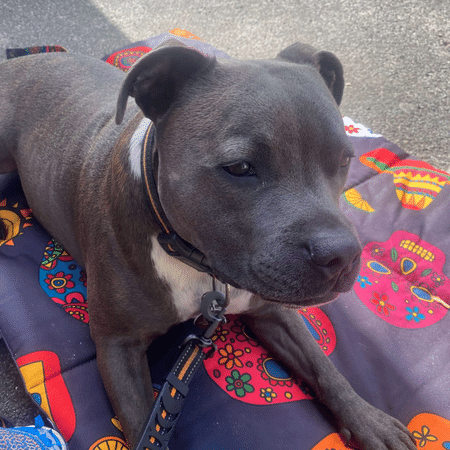
The most loving of dogs, Moses completely forgot mum Dana was there when he was out and about. She reached out to games-based trainer Marianne to help focus her disengaged boy.

Marianne Dawson
Behaviour Trainer & Founder,
Pet Professor
Cert IV Companion Animal Services
Force-free, evidence-based, games-based training for dogs and cats across Sydney since 2018.
About Marianne