
What was going on
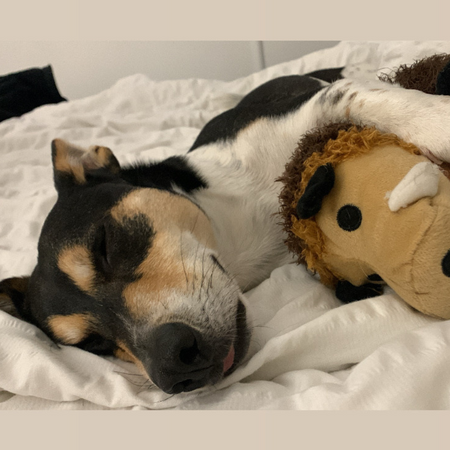
Gregg is a rescue Jack Russell and Charlotte’s family is his fourth. He’s both people-reactive and dog-reactive, which meant walking him was genuinely stressful. Charlotte didn’t know what had happened to him before he came to them, but whatever it was had left its mark.
For a while, Charlotte hated walking Gregg alone. The thought of it was anxiety-inducing. Not knowing how he’d react, not feeling in control, and worrying about what might happen.
What Charlotte had tried
Charlotte had tried another trainer before and had a bad experience. She was understandably apprehensive about trying again. But two close friends had used Pet Professor and only had good things to say, so she took the step.
What we did
Our first contact was a phone consultation. Marianne focused on making Charlotte feel supported and reassured from the start: that things weren’t her fault and that they could get better.
Over several sessions, Marianne worked with both Charlotte and Gregg. The training focused on keeping Gregg calm, noticing when he’s getting stressed, and keeping him focused. Critically, Marianne also trained Charlotte, teaching her how to stay calm in stressful situations, which in turn keeps Gregg calm.
Between sessions, Marianne checks in regularly. If Charlotte has a question, she can text or email for a quick reply. As Charlotte described it: “She’s always willing to help.”
A key mindset shift: there is no quick fix. Gregg is a rescue with an unknown history. The goal isn’t to make him the “perfect dog”. It’s to give him the confidence that he doesn’t need to react.
What changed
Charlotte now feels confident walking Gregg. She feels in control. Every walk, she sees improvement. Even if the steps are small, they’re moving forward.
“For a while I hated walking Gregg alone and the thought of it was really anxiety inducing. Now, I feel confident walking him and that I have control.”
And Gregg? “He’s the most loving dog. He’s a bit damaged (as most rescue dogs are) but every day I’m seeing an improvement in him.”
Since then
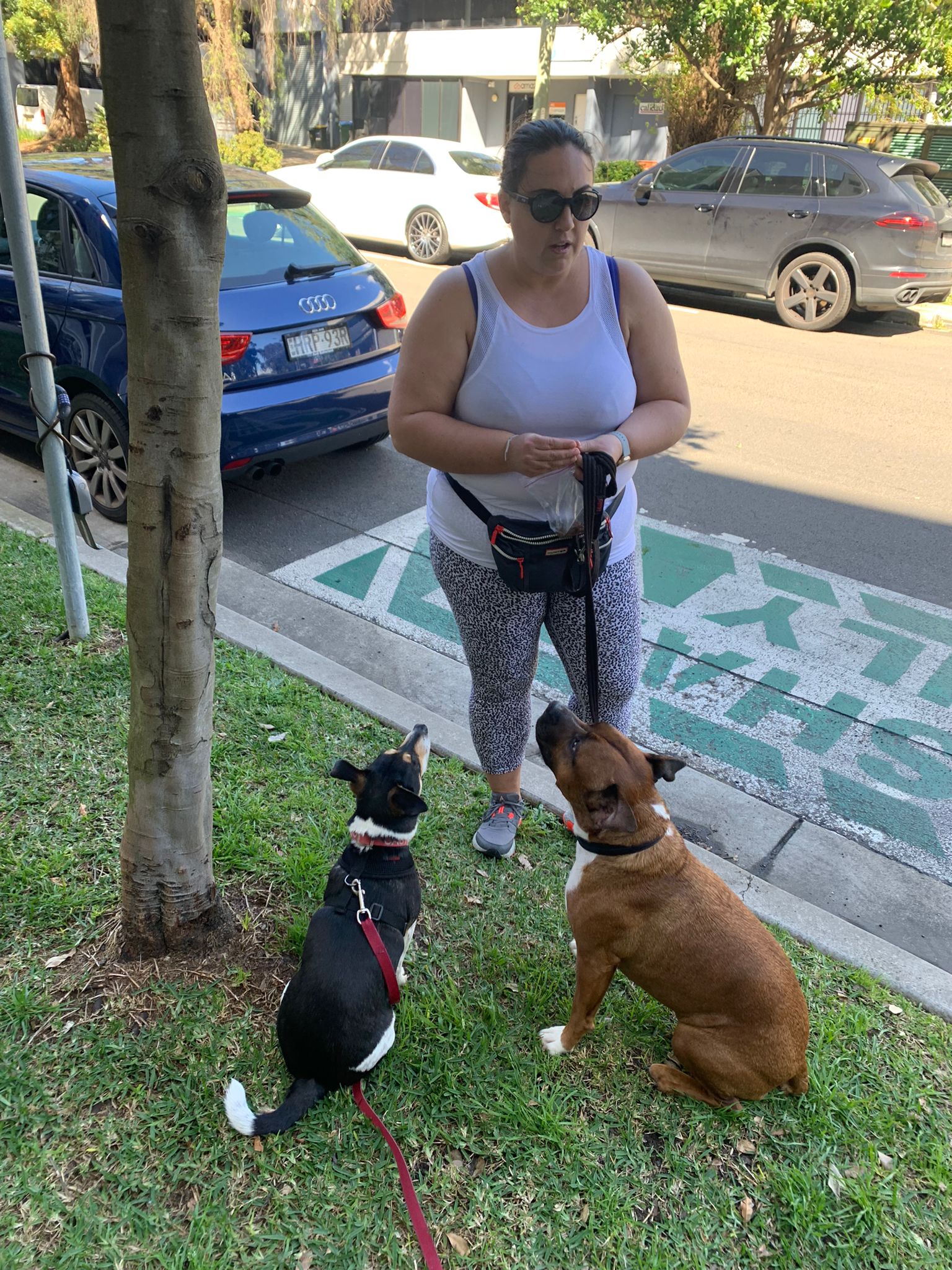
The story doesn’t stop there. A few months after we finished the core sessions, Charlotte sent this message (September 2022). Gregg was sitting calmly next to another one of our reactive-dog clients, Rip, who we’d also worked with:
“Something unbelievable just happened! We put so much time in and kept them apart but there wasn’t one bark, woof, lunge, pull… anything! He was totally calm because I was calm (and cos he was more interested in seeing Hannah than Rip).”
Then, nine months later (June 2023), another update. This one attached to a video of Gregg walking calmly on lead past people and other dogs:
“Hey Marianne! I know we’ve not seen you for a while/sent you an update but we’ve come so far recently. Thought I’d share this with you from this morning. We’re still rewarding when he walks nicely past people and other dogs but I’m also working on trying to get him into a down nicely when we need him to be calm when it’s busy. Could never have done this without you!”
This is what the long game looks like. Not a quick fix. A steady, daily practice that compounds. Two reactive dogs sitting peacefully side by side. A calm, confident walk past the kind of triggers that used to make outings anxiety-inducing. Real change, built in small steps, over years.